
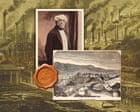
New research indicates that British businesses, led by long-serving directors of the Bank of England, profited from "brutal" enslavement in Cuba decades after slavery's abolition in the British empire. The findings highlight how slave-trade wealth remained embedded in Britain’s financial system.
New research indicates that British businesses, led by long-serving directors of the Bank of England, profited from "brutal" enslavement in Cuba for decades after slavery's abolition in the British empire.
The findings by historian Chris Evans reveal that men and boys were subjected to prison-like conditions at the El Cobre copper ore mine near Santiago de Cuba. This mine supplied British firms during the Industrial Revolution, with Cuba becoming the UK's most important foreign source of copper ore in the 1840s.
Britain abolished its trade in enslaved people in 1807 and passed legislation abolishing slavery in most of its empire in 1833. However, as the 1833 Slavery Abolition Act was implemented, "City of London figures" developed the mining of El Cobre's copper ore deposits, an operation that depended on enslavement in Spanish-controlled Cuba.
Key players in this highly lucrative operation included Bank of England directors Charles Pascoe Grenfell (1790-1867) and William Thompson (1792-1854), who acted in a private capacity. Grenfell was a partner in the Cobre mining and export company, which Evans suggests was "likely to be the largest slave enterprise in the western hemisphere" by the 1840s.
Enslaved copper miners at El Cobre were likely trafficked to Cuba through illegal voyages from the Bight of Biafra, in modern-day Nigeria. The high death rate at El Cobre suggests thousands of Africans were exploited there, with their life stories largely undocumented. While slavery was legal in Cuba at the time, the importation of enslaved people was not.
In 1817, Spanish authorities, under British pressure, signed a treaty banning the trafficking of enslaved Africans to Cuba. However, local colonial authorities ignored this ban, with 25,000 captives reportedly arriving in 1859 alone, as Cuba's sugar and coffee plantations relied heavily on enslaved African workers.
Pressure from the British and Foreign Anti-Slavery Society in 1843 led to proposed legislation aimed at prohibiting British subjects from owning enslaved people in other jurisdictions. This followed undercover investigations that exposed British mining companies' activities in Brazil and Cuba, including at El Cobre.
However, lobbying by mining interests led to the dilution of this legislation, allowing companies to retain enslaved workers as "property" and hire others. These concessions prompted abolitionists to withdraw their support, and the exploitation continued. Neither Grenfell nor Thompson appears to have faced legal penalties for their involvement.
Enslavement at El Cobre finally ended after Cuban revolutionaries captured the town from Spanish forces in November 1868. The rebel commander proclaimed the miners' emancipation on New Year's Eve, and formerly enslaved workers later joined Cuba's liberation army.
Professor Evans, a former professor at the University of South Wales, notes that while Britain was winding down its own slave system in the 1830s, British capital was boosting slavery elsewhere. He states that British engagement with slavery continued long after emancipation, involving both London's mercantile-financial elite and hundreds, possibly thousands, of middle-class investors.
The UK is currently facing increased pressure to issue a formal apology to Caribbean and African nations for Britain’s centuries-long perpetuation of transatlantic chattel slavery. A Bank of England spokesperson stated, "We have previously acknowledged the role of former governors and directors in the slave trade."


0 تعليقات